
History 2700 Fall 2004 MacKay
Week 3
Colonial America/ Subsistence Economy/Mercantilism
Mercantilism: From the 15th to the 18th century, when the modern nation-state was being born, mercantilism developed as an economic system based on:
Subsistence Economy- the products are made not for sale but for consumption inside of economically closed producing unit (the family, the community); it is opposite the market economy, where the products of work are intended for sale in the market.
Readings: Major Problems: Chpt 2: Documents 1, 2, 4, 6; Chpt. 3:Documents 1, 2, 3, 7, 8
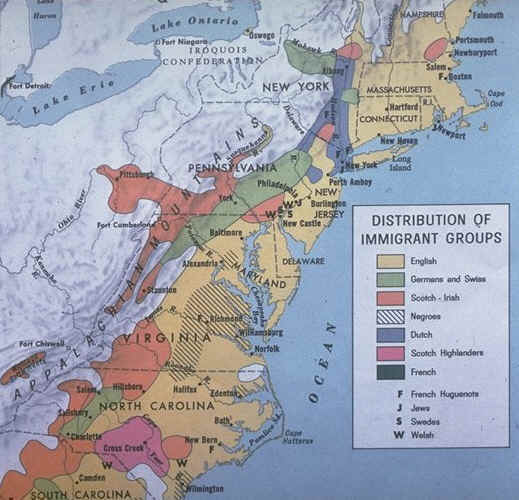
Also: use the chart describing the English Colonies.
Also: short article on Atlantic Slave trade: http://encarta.msn.com/text_761595721___2/Atlantic_Slave_Trade.html
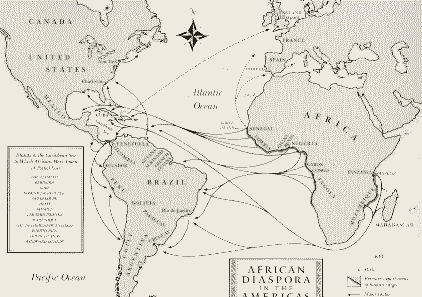
Of the 6.5 million immigrants who survived the crossing of the Atlantic and settled in the Western Hemisphere between 1492 and 1776, only 1 million were Europeans. The remaining 5.5 million were African. An average of 80 percent of these enslaved Africans—men, women, and children—were employed, mostly as field-workers. Women as well as children worked in some capacity. Only very young children (under six), the elderly, the sick, and the infirm escaped the day-to-day work routine.
Academic Journal/Response topic #4: What was "mercantilism" and why did it encourage European countries to develop overseas empires? Reference:
Richard Hakuyt's Discourse of Western Planting, 1584: http://www.ukans.edu/carrie/docs/texts/hakluyt.html
Academic Journal/Response topic #5: What was the "Middle Passage"? How is the enslavement and diaspora of Africans by Europeans a dynamic of mercantilism?
For information about the Middle Passage, see: http://www.pbs.org/wgbh/aia/part1/1p277.html
Some useful Internet sites:
Archiving Early American History:
http://www.earlyamerica.com/Workshop in Early American History (with images and documents)
http://loki.stockton.edu/~gilmorew/0colhis/c2wkshop.htmLinks to Sources for Early American History:
http://www.clements.umich.edu/Links/Histsub.htmlA timeline for the Colonial Period from the History Place: http://www.historyplace.com/unitedstates/revolution/rev-early.htm
