

| |
Ornithology
Zoology 4670
Lecture
Spring 2009
Dr.
John F. Cavitt
Office:
ET 135, LI 58
Avian Ecology Lab: ET 133
Phone:
Avian Ecology Lab - 626-8634
Office -
626-8541, 626-6172
Email:
jcavitt@weber.edu
Office
Hours: Tues 11:30 - 12:30
Course
Content and Objectives:
This course is designed to introduce students to the
field of Ornithology. Unlike most
of the courses in our department, this course will look at biology from the
viewpoint of a particular class of organism - birds. Ornithology is integrative in nature and as such, we will be
touching upon almost all aspects of avian biology.
Upon completion of this course students should be
able to:
·
Explain
the basic classification and phylogeny of birds and understand their evolution
·
Understand
the basic life processes, characteristics and behaviors unique to birds
·
Identify
common species found within the intermountain west
Attendance:
Attendance is required for you to succeed in the
course for a number of reasons: 1) I will be presenting material in class that
is not found in your text, 2) I utilize an Active Learning style
of teaching that requires student participation, and 3) Quizzes will be given
periodically during lecture which cannot be made-up. If you have to miss a lecture due to an illness, for example,
be sure to get good notes from someone in the class right away.
I will not be able to provide students with lecture notes.
I also expect students to arrive on time and to stay for the entire
class. My lectures continue until 11:15. The class will be dismissed
as soon as my thought is completed. Although
I expect you to attend class I will not record attendance.
I also expect students to show proper classroom etiquette by- 1) not
talking while I am talking, 2) not sleeping or reading during class, 3) turning
off all cell phones and pagers before class.
Student
Expectations:
As
a Zoology major, you are expected to spend 2-3 hours per credit hour, every week
outside of class studying and preparing assignments.
Thus for a 4 credit hour course like Ornithology, you should be spending
8-9 hours studying outside of class. If
you are involved in other activities that prevent you from devoting the
necessary time to study/assignments, you need to make choices and adjust your
schedule as necessary. I will
demonstrate respect for each student and in turn you will demonstrate a
respectful attitude toward me as well as other students in the class.
Exams,
Quizzes and Assignments:
You are
expected to take all exams as scheduled. If
you have to miss an exam, you must let me know BEFORE THE EXAM, or as soon as
physically possible. It is your
responsibility to contact me if for some valid reason you miss an exam and must
arrange a make-up (exam make-ups are essay exams). Quizzes cannot
be made-up if missed. Students will
not be penalized for missed quizzes if the absence is excused (illness, death)
by me. Excused absences will be
granted only if I am notified as soon as possible.
Late assignments will be penalized 5% / day, up to five days late; after
five days, unexcused late assignments will not be accepted.
Late assignments will be accepted without penalty only if a valid excuse
(e.g. documented illness) is presented as close to the due-date as is practical.
Each student is expected to do his or her own work.
Cheating, plagiarism and all other forms of academic dishonesty will not be
tolerated. Students are expected to abide by the Student Code as printed in the
WSU Student Handbook. Proof of academic dishonesty will result in a final grade
of E for the course and the circumstances will be reported to appropriate
University authorities.
Any student requiring
accommodations or services due to a disability must contact Services for
Students with Disabilities (SSD) in room 181 of the Student Service Center.
SSD can also arrange to provide course materials (including this
syllabus) in alternative formats if necessary.
Study
Groups:
None
of us is as smart as all of us, Roy Disney.
Students who study with (a) classmates) learn more and get better grades.
Do yourself a favor: take the initiative and find a study partner or two
and do some studying together. Remember
to quiz each other thoroughly. You
want to find out BEFORE an exam what you dont know and then learn it.
Many of the assignments can be completed together so establishing study
groups can greatly assist you in completing the material.
Assigned
Readings from:
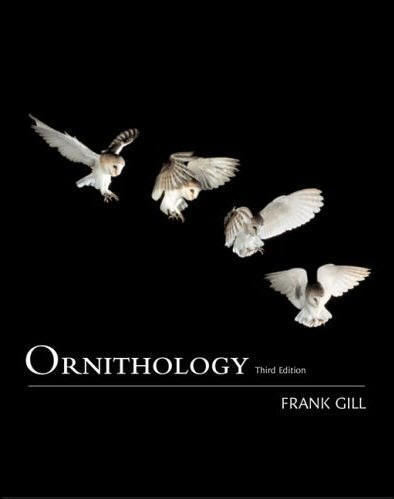
(1) Textbook: 2007. Frank B. Gill. Ornithology. Freeman 3rd edition.
(2) Recommended Field Guide: Sibley, David Allen. 2003.
The Sibley Field Guide to Birds of North America. Alfred A. Knopf
Publishers, New York. Students can receive a student discount on this
field guide at the Wild Bird Center,
1860 North
1000 West, Layton, UT, (phone -(801) 525-8400)
(3) Other sources as assigned in lecture; these will
be posted as pdf files on
this website.
Grading:
There will be a total
of 575pts over the course of the semester. The points will be distributed as
follows:
(1) 225pts from the
Laboratory (see Laboratory)
(2) 100pts from 1st
exam, Jan 31
(3) 100pts from 2nd
exam, Feb 28
(4) 150pts from
comprehensive final, Wed. April 30, 9:30-11:30am
The following percentages
will determine the grade earned:
93 - 100% A
90 - 92% A-
87 - 89% B+
83 - 86% B
80 - 82% B-
77 - 79% C+
73 - 76% C
70 - 72% C-
67 - 69% D+
63 - 66% D
60 - 62% D-
below 60% E
|